

Vultr is a well-known cloud computing provider with over 32 global data centers, making it a decent alternative to DigitalOcean. They offer cloud computing solutions ranging from basic VPSs to GPU-powered bare metals. Over the years, I have used various cloud hosts, and Vultr delivers decent TTFB, especially on high-frequency servers powered by EPYC and Intel Xeon. Scores pretty well on benchmarks.
Vultr, DigitalOcean, UpCloud, Kamatera, and Krystal Cloud are all decent providers of virtual servers as they are all competitively priced.
I like trying out virtual servers from different providers. It’s an affordable way to host a website and gives you the flexibility to make changes whenever you need.
You should obtain a server from a firm that does not deal in shared hosting. I usually go with smaller or medium-sized providers. Now, let’s review Vultr cloud hosting.
Products and Pricing
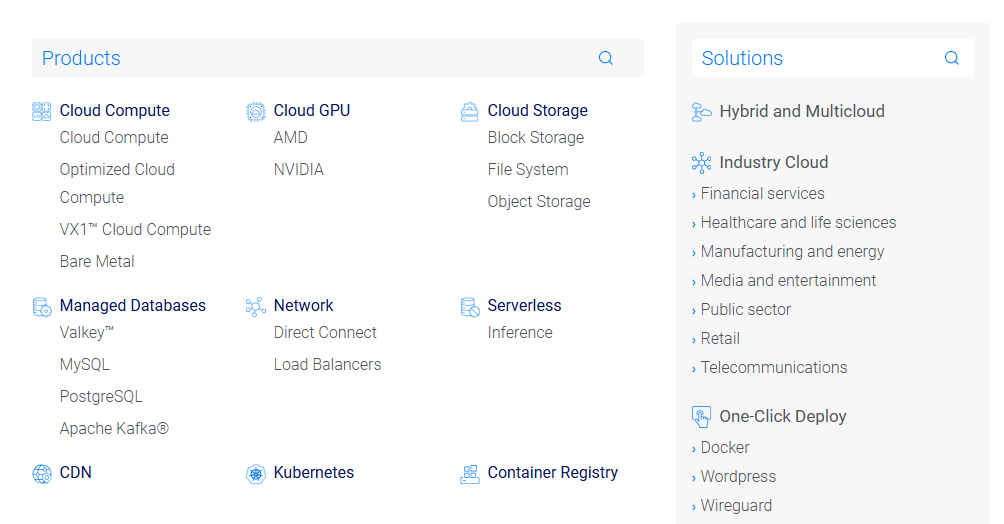
Vultr is more than just a web host, as it offers a range of cloud computing services, including storage, load balancers, GPUs, VPNs, and more. Cheaper than AWS and Google Cloud (at the same price as DO/UPcloud).
Let’s review the types of cloud services and pricing they offer.
Regular Performance
Regular performance servers are suitable for static websites with moderate resource requirements. These servers use older-generation Intel CPUs and standard SSDs.
These servers are more cost-effective than high-frequency servers, but I’d prefer high-performance servers, such as HF or AMD EPYC, for active websites. Price list:
| CPU | RAM | Bandwidth | Storage | Monthly fee |
|---|---|---|---|---|
| 1 | 1 GB | 1 TB | 25 GB | $5 |
| 1 | 2 GB | 2 TB | 55 GB | $10 |
| 2 | 2 GB | 3 TB | 65 GB | $15 |
| 2 | 4 GB | 3 TB | 80 GB | $20 |
| 4 | 8 GB | 4 TB | 160 GB | $40 |
SSD hosting is viable, but I recommend it only for average sites, as my speed test results were lower than expected. They have servers with 24 CPUs and 96 GB RAM.
I don’t see the point in using SSD hosting, since high-frequency/high-performance servers are slightly pricier. However, the performance is decent.
When it comes to unmanaged cloud VPS, I prefer small companies. VPS hosting offers more features and flexibility, and can be integrated with your favorite control panel. Try Webdock VPS; they’re cheaper, but they have only one data center.
High Performance Servers
As I mentioned, they offer two high-performance server options: AMD EPYC and Intel Xeon, both priced the same. You can pick up to 48 GB of RAM.
| CPU | RAM | Bandwidth | Storage | Monthly fee |
|---|---|---|---|---|
| 1 | 1 GB | 1 TB | 32 GB | $6 |
| 1 | 2 GB | 2 TB | 64 GB | $12 |
| 2 | 2 GB | 3 TB | 80 GB | $18 |
| 2 | 4 GB | 3 TB | 128 GB | $24 |
| 3 | 8 GB | 4 TB | 256 GB | $48 |
If you have dynamic sites or substantial traffic, high-frequency can be the right choice, as it enables quick TTFB and fast server performance. They’re NVMe drives, not SSDs.
Optimized Cloud Compute
Optimized cloud machines run on AMD EPYC CPUs. They offer fast and reliable performance for different apps, and you can choose from four types of services:
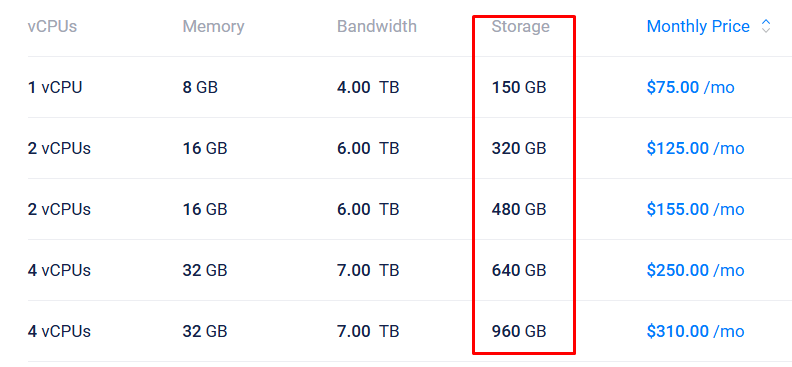
1. Storage Optimized: Typical CPU/RAM combo and high NVMe storage. Works well for sites with many databases and related systems. With 1 CPU, 8 GB RAM, and 150 NVMe, it costs $75.00 per month; NVMe capacity can be increased to 5 TB.
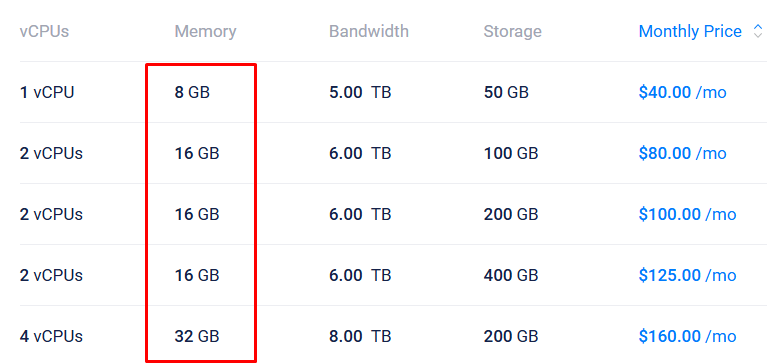
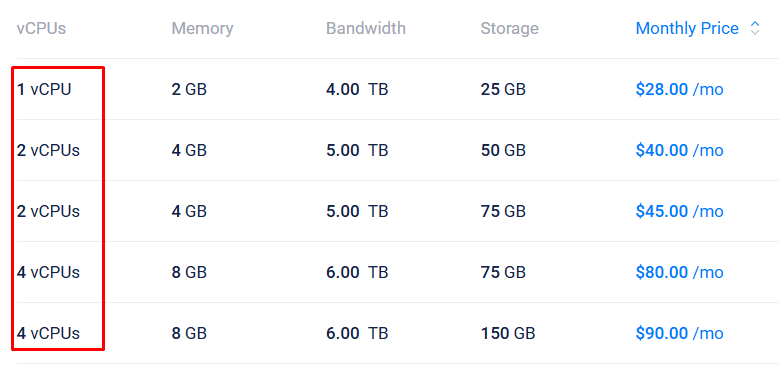
2. Memory-Optimized: These VMs provide significantly more RAM than CPUs and NVMe. Starting at $40.00/month with 8 GB RAM.
3. CPU Optimized: More CPU power in these VMs than RAM and NVMe SSDs. Ideal for video processing, data syncing, ad networks, high-traffic websites, and mining.
You can get 4 cores for under $100. Dedicated servers or dedicated CPU virtual machines are ideal for applications that require substantial processor power.
4. General Purpose: Ideal balance between CPU, RAM, and NVMe. Suitable for online stores, gaming, streaming, API servers, and web apps with a lot of traffic. Priced at $30 per month, it includes 1 CPU, 4 GB RAM, and 30 GB NVMe storage.
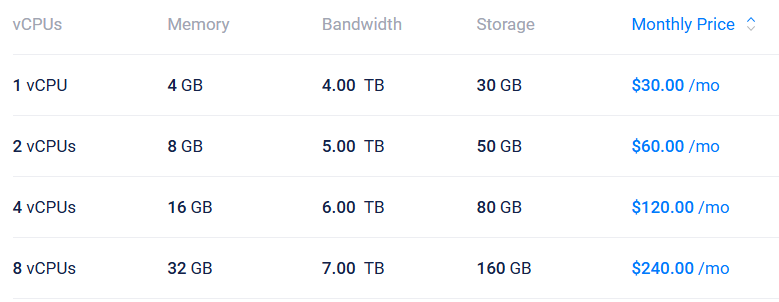
Optimized cloud servers are often used for specific purposes. Although expensive, they work well for average websites and are ideal for large-scale web projects.
Vultr Bare Metal
Bare Metal offers direct access to physical hardware without a virtualization layer. Vultr offers two types of bare-metal servers: GPU and CPU. GPUs are commonly used for AI training and inference, and support high-performance models like the AMD MI355X. You can also opt for low-end GPUs, such as the NVIDIA A100 and A16.
A bare-metal server provides high performance by dedicating all server resources to a single client. You are responsible for setup and management, but you receive dedicated CPU cores and RAM.
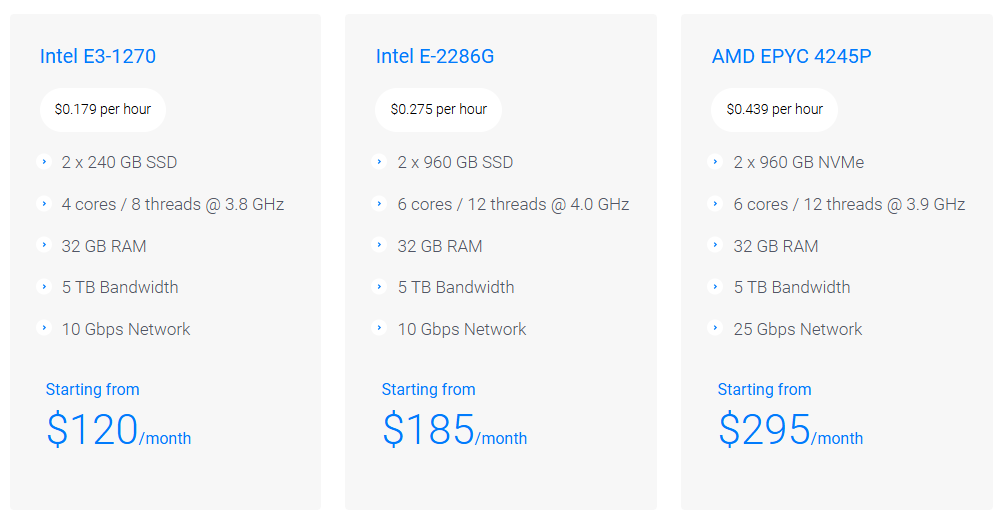
CPU bare-metal servers are well-suited for e-commerce, databases, multi-apps, ad exchanges, hosting, and other high-scale business needs. Bare metal is also ideal for high-traffic websites. Many resellers and shared hosting providers use this service. Plans start at $120 per month and include 4 cores, 32 GB RAM, and 5 TB bandwidth.
Other Products
They offer a lot of hosting and storage options:
- Block storage: 10 GB for $1 per month.
- Object Storage: Object storage lets you store videos, songs, and files online. Monthly bandwidth and storage up to 1 TB.
- Databases: Vultr-managed databases for Valkey, MySQL, and PostgreSQL, and in-memory NoSQL databases for large-scale, dynamic data. It supports multiple use cases, including serving as a database, caching, streaming service, and more.
- Load Balancers: Load balancers help minimize errors and downtime by distributing server workload. It’s $10.00 per month.
- CDN: It’s usually better not to use the CDN included with your hosting provider. There are many reliable CDN providers to choose from.
Vultr High Frequency
Well, here’s the most preferred cloud VPS among bloggers and developers: “Vultr High Frequency“. Multiple tests show that high-frequency servers outperform standard hosting, as reflected in strong Geekbench scores. These servers use Intel Xeon CPUs above 3 GHz and NVMe drives, though they still operate in a shared environment.

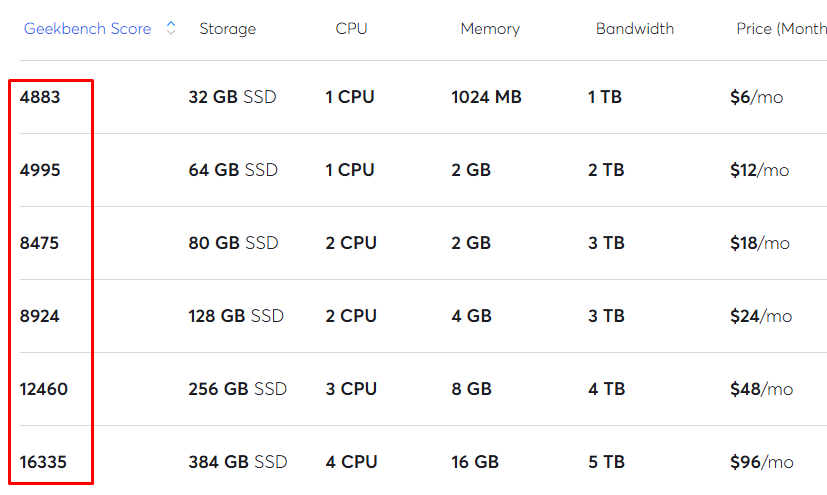
They also offer high-performance servers powered by AMD EPYC, which deliver performance comparable to high-frequency. Modern hardware and software stacks make it easier to optimize TTFB and overall performance.
Shared hosting typically offers limited control, as you must use the host’s configuration. It’s challenging to make changes because they use both Apache and Nginx as reverse proxies. The server is entirely Apache on old-gen hardware. Typical static sites, such as blogs and content sites, usually don’t encounter many issues with this setup.
But High-frequency servers are suitable for all types of websites, including those with significant uncacheable content. They offer NVMe storage and high clock CPU speeds, which support sites with complex themes and advanced features.
Cloudways, xCloud, and ServerAvatar provide Vultr high-frequency servers at a slightly higher cost due to pre-configured optimizations. These options are well-suited for users without server management experience.
Data Centers
Vultr operates more than 30 data centers worldwide, enabling rapid deployment of low-latency servers from any location. The control panel allows you to select your preferred server location during setup.
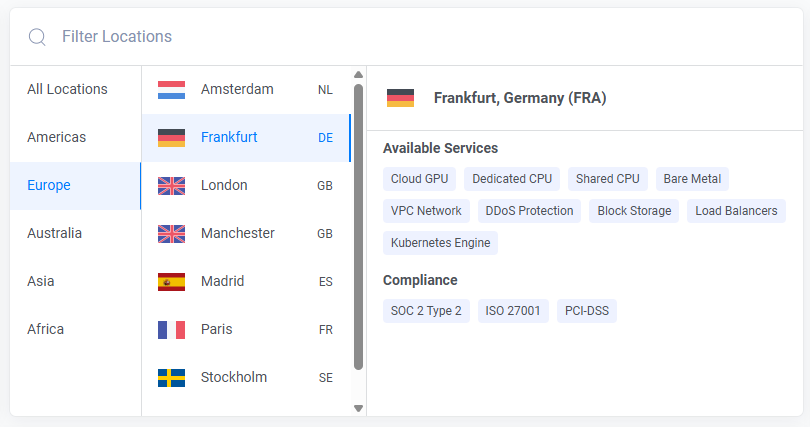
Data center regions:
- North America: Chicago, Dallas, Seattle, Los Angeles, Atlanta, Silicon Valley, Toronto, Miami, Mexico City, Honolulu, and New Jersey.
- South America: São Paulo and Santiago.
- Europe: London, Frankfurt, Milan, Paris, Manchester, Warsaw, Madrid, Stockholm, and Amsterdam.
- Asia: Osaka, Tel Aviv, Tokyo, Seoul, Singapore, Mumbai, Bangalore, and Delhi.
- Australia: Melbourne and Sydney.
- Africa: Johannesburg
Ideally, your DNS connection time should be under 100 ms. Choose a server location that is close to your users. For local websites, set up servers as close to your audience as you can. If your website gets most of its visitors from Asia, it’s a good idea to use a data center in that region, like Singapore.
If your traffic targets the USA, Canada, or South America, choose a U.S. data center, such as Silicon Valley. Pick Melbourne if your users are in Australia, New Zealand, and South Asia. Singapore is also a good option.
If all your visitors are from Africa, Johannesburg is the best choice. Still, I suggest keeping the website based in a stable city like Madrid. Latin American users can choose between Mexico City, São Paulo, and Santiago.
Where is the best place to host websites with worldwide traffic?
I have tested several locations, including Europe, the US, Singapore, and India, but there is no single best option for all cases. Review your website’s traffic sources and select a data center close to your primary audience.
For example, if most of my website’s visitors come from the US and EU, I would pick a server in New Jersey or Frankfurt to keep things balanced.
Modern web hosts with edge caching help your site load quickly for users worldwide. Use a CDN like FlyingCDN to ensure a consistent experience for everyone. However, that might not always work, particularly for sites with a lot of dynamic content. Select a nearby data center for many reasons. You’ll need a CDN for average to big websites.
Control Panel
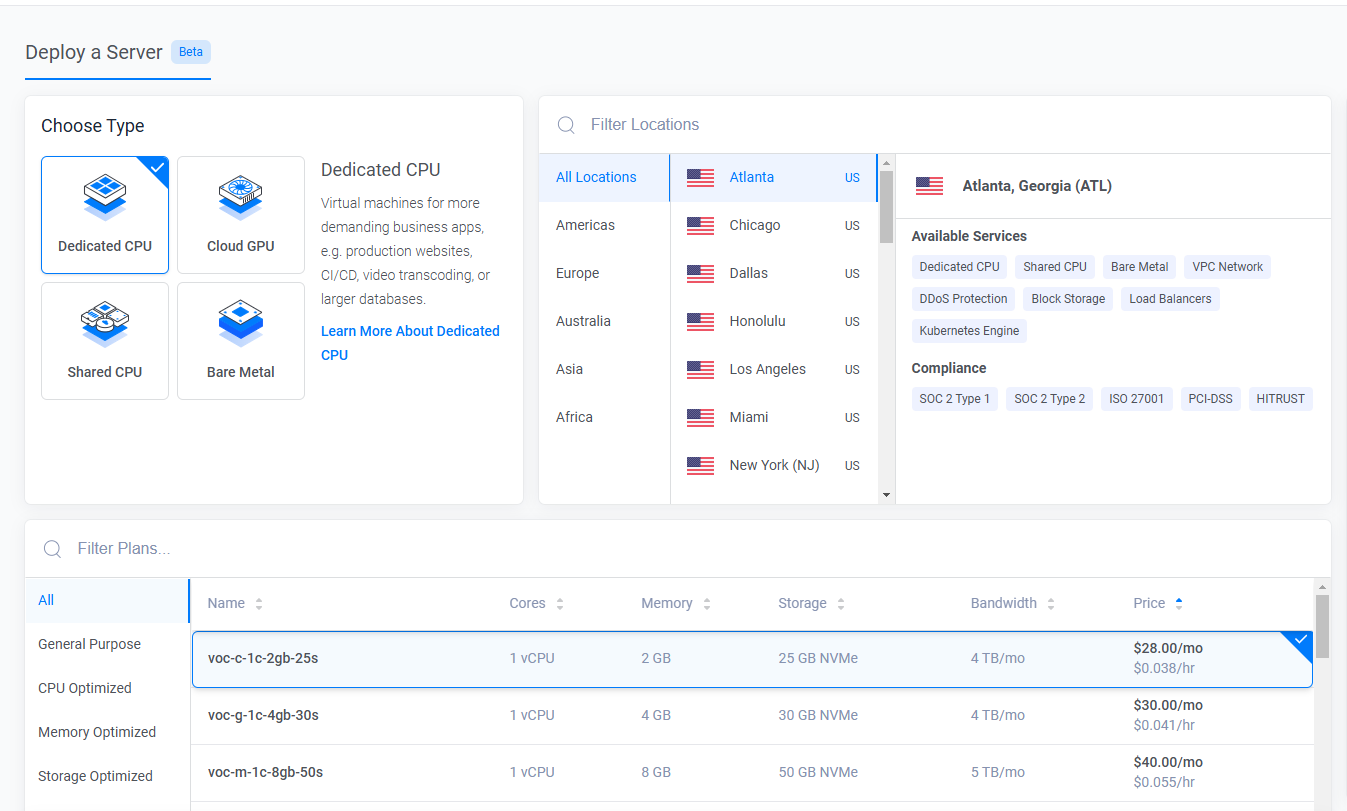
Vultr has a user-friendly interface and control panel with features sufficient to manage a cloud server. Deployment is easy and can be completed quickly with a few clicks. Once deployed, you can manage your server through the dashboard.
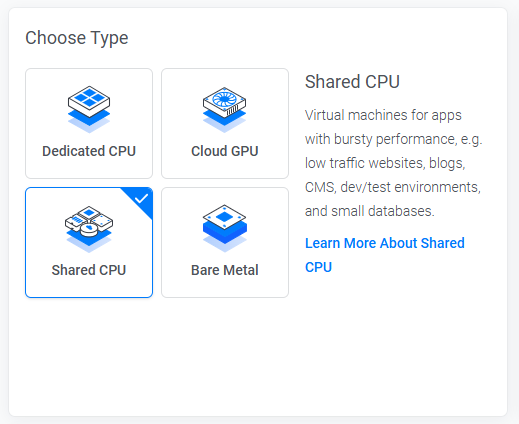
They do not provide fully managed services like a standard web host. However, you can start, stop, reboot, and reinstall servers as required. You can monitor your server’s resource usage in the server console and manage the IPs assigned to your server.
The server health tool can alert you when your application is in high demand. The panel enables users to manage features such as firewalls, networks, and DNS.
The team management feature lets you set up limited access for others. It includes all the tools you need to run a web server. But if you are a typical user, I recommend VULTR paired with cloud hosting control panels like RunCloud, xCloud, or Ploi.
You don’t need technical or server admin experience to use cloud hosting panels. You can use them quickly, and most features are within reach with just a few clicks.
There is one catch: using the control panel comes with a cost. Some providers charge up to $15 a month. GridPane, for instance, can cost over $100.
CloudPanel does not charge, but you need some technical know-how to use it. xCloud costs less than $10/month for a standard user. You can also try Ploi or FlyWP for free.
Or try the Vultr control panel; it’s not bad. You can try different settings once you know what to change, which is closer to how the standard UI works.
Marketplace
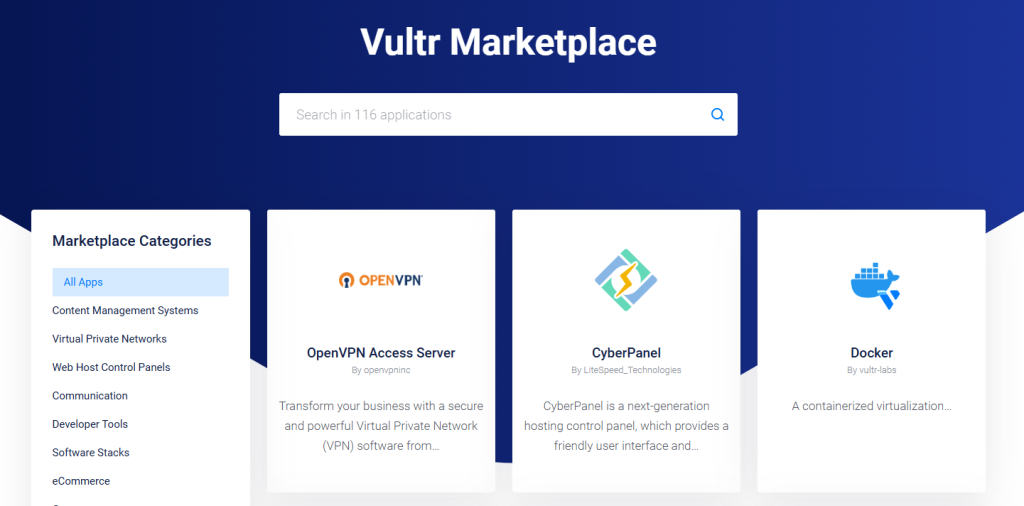
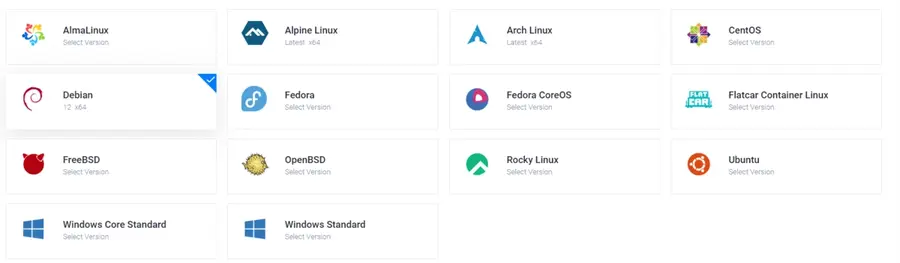
Vultr gives you access to a large marketplace where you can deploy apps with just one click. There are numerous open-source and paid apps. You can install operating systems such as Debian, Ubuntu, Rocky Linux, and Windows, or upload a custom ISO.
If you want to use LiteSpeed hosting, you can set up OpenLiteSpeed with WordPress on Ubuntu. It also works with Drupal, Joomla, and Rails. LiteSpeed is a good choice because it comes with a free cache plugin.
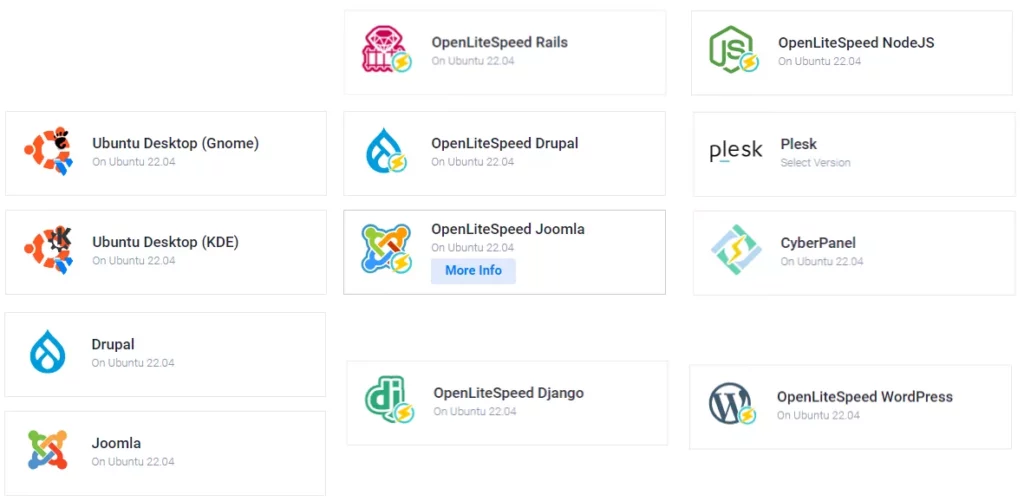
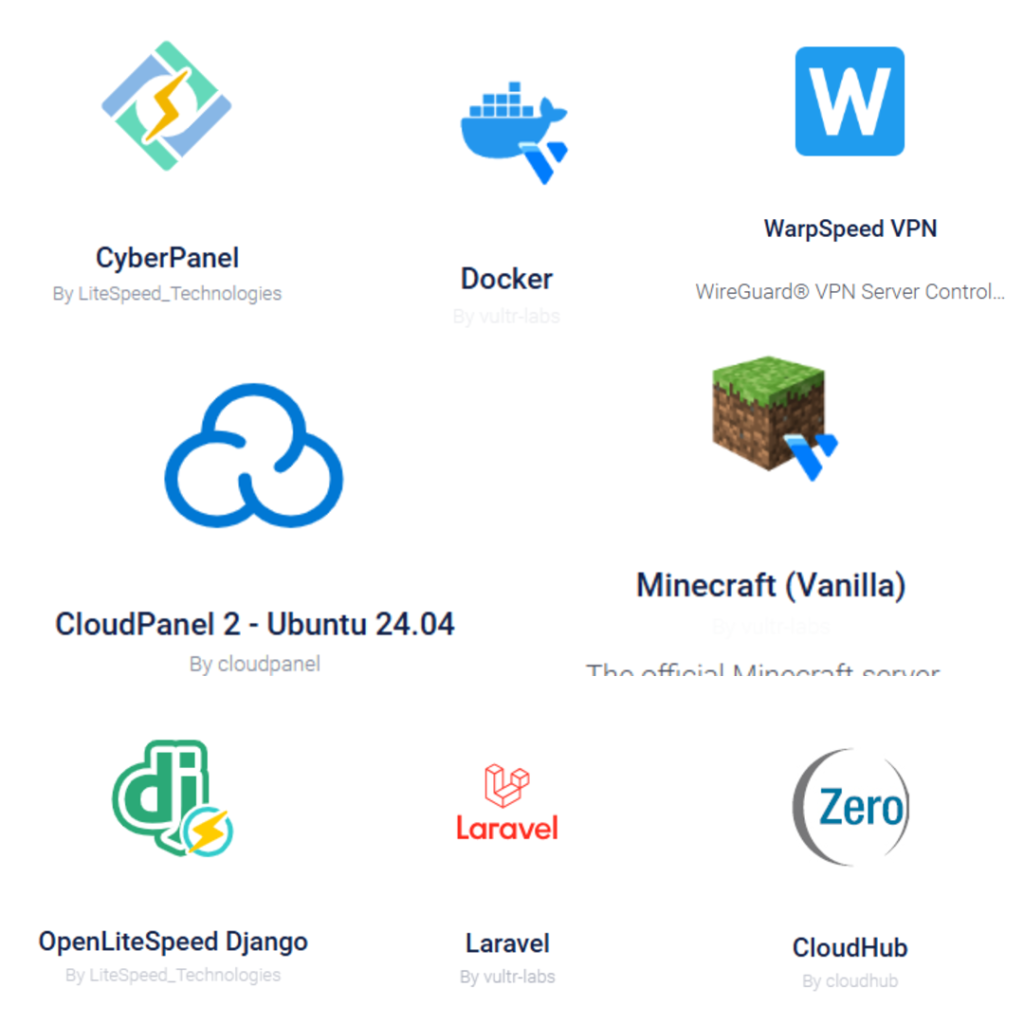
You can use free control panels such as CloudPanel and FASTPANEL alongside paid control panels like cPanel, Plesk, and SWPanel. The marketplace features notable apps such as Docker, Bitnami stacks, and Colyseus.
You don’t need a third-party panel if you are familiar with these tools. They have some clear documentation on how to do these things. For average and new users, you may want to opt for a control panel (connect to the server with an IP address or SSH).
Downsides to Vultr Cloud Hosting?
I’ve been using them for years, and nothing’s ever gone wrong. However, there are certain drawbacks…
- There are numerous complaints about their customer service; however, it’s unmanaged. Most unmanaged cloud computing services do not provide comprehensive customer support, but they offer adequate documentation.
- Similar prices to DigitalOcean, but pricier than Hetzner or Starlight.
- Some customers complain about downtime.
- Advanced packages aren’t available at all server locations.
- I am not happy with the web console (built-in SSH terminal) because it is hard to use and almost unusable. In this case, you will likely need to use an external SSH client such as OpenSSH or PuTTY.
Final Thoughts
With Vultr, you can deploy virtually anything, from a small website to a large one, even AI. They have high-frequency servers built with the latest tech. I haven’t used their Cloud GPU or Bare Metal much, so I can’t really say how they perform.
You can use VULTR without much trouble if you’re comfortable with these things. They have a nice app marketplace, and you can even upload your ISO and operate 32 data centers worldwide. They also accept crypto payments.
Everything has its pros and cons; Vultr’s panel is friendly, but the built-in SSH terminal is relatively annoying. There are a few more areas where they can make improvements.
There are numerous cloud computing providers, including DigitalOcean, UpCloud, Kamatera, Linode, and large providers like AWS, which are reliable but expensive.
Read More: Methods To Copy Text From Protected Website